• 99%+ purity, third-party tested
  • Malaysia-based supplier, fast local delivery
  • Pay by Touch 'n Go QR, confirm on WhatsApp
  • For research use only
  • 99%+ purity, third-party tested
  • Malaysia-based supplier, fast local delivery
  • Pay by Touch 'n Go QR, confirm on WhatsApp
  • For research use only

All products are for laboratory research use only. Not for human consumption.

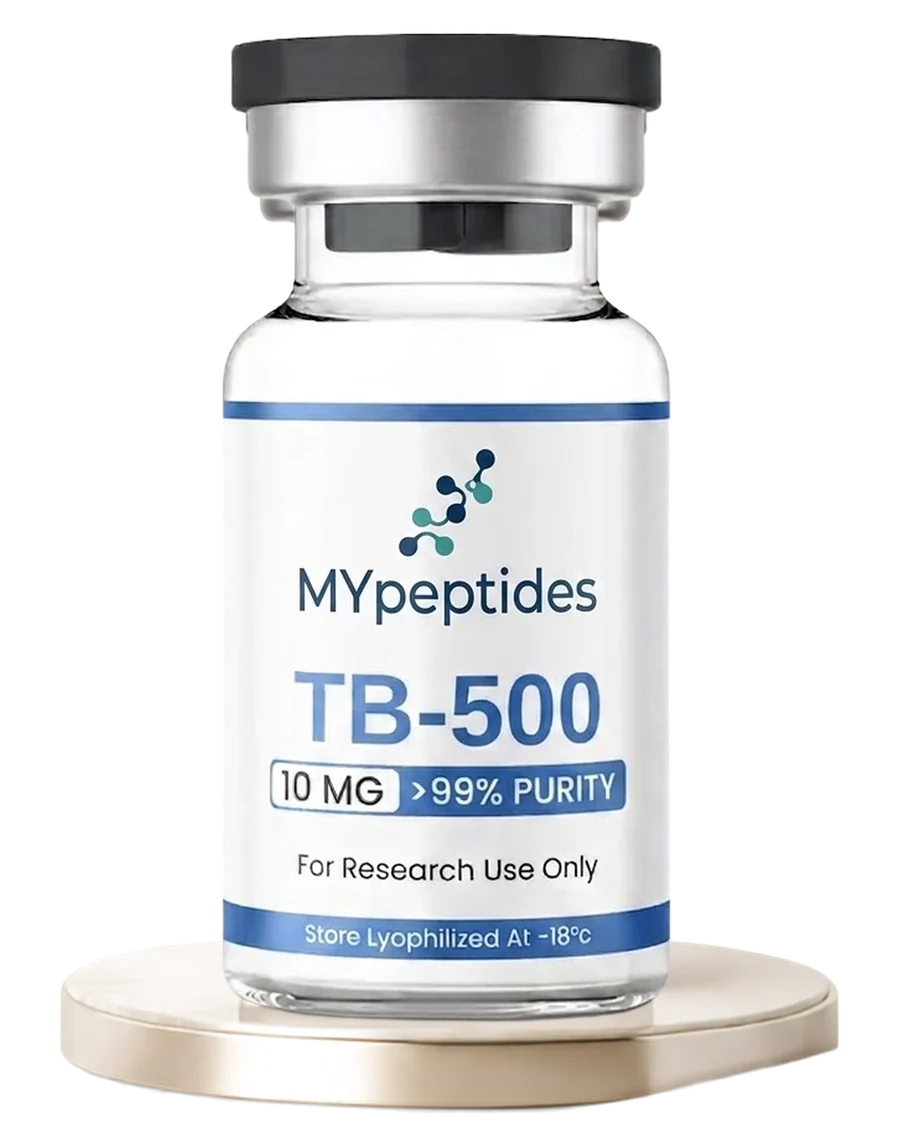
TB-500 10 mg research peptide vial, >99% purity

Tissue Repair · Tissue Recovery

The Healing Catalyst

TB-500

  • 10 mg
  • >99% purity
  • Lyophilised

RM 250

Unlock your body’s natural fluidity. TB-500 10mg activates cellular migration, encouraging deep tissue renewal and ageless vitality.

Key mechanisms & benefits

  • It supports rapid muscle recovery and joint flexibility, restoring fluid movement after training or daily stress.
  • By promoting new cellular pathways, it delivers oxygen and nutrients exactly where your body needs to regenerate.
  • TB-500 keeps your tissues supple, your skin vibrant, and your lifestyle beautifully unrestricted.
Certificate of Analysis

All products are independently tested by accredited third-party laboratories. Results confirm identity, purity, and potency.

In stock

1
  • No online payment. We confirm your order on WhatsApp.
  • Store lyophilised at −18 °C.
Ask about this product

For research use only. Not for human or veterinary consumption. This product is not a medicine and is not intended to diagnose, treat, cure or prevent any disease.

Overview

The Actin-Binding Fragment of Thymosin β4: Ac-LKKTETQ

TB-500 is a synthetic seven-amino-acid peptide, Ac-LKKTETQ: the N-terminally acetylated 17–23 fragment of thymosin beta-4 (Tβ4). Analytical studies identified this fragment as the active ingredient of TB-500 preparations. It is not the full 43-amino-acid Tβ4 protein.

The LKKTETQ sequence is Tβ4's central actin-binding site, and in studies of Tβ4's active regions it promoted angiogenesis, wound healing and cell migration. Research on TB-500 itself is still limited: a 2024 study noted that its biological effects had not been documented directly, and found that its wound-healing activity in fibroblasts may come from a metabolite, Ac-LKKTE. In a 2026 rat Achilles tendon study, TB-500 improved tendon strength and structure.

Mechanism of action

Actin Binding

Tβ4's Central Active Site

LKKTETQ is the region of Tβ4 that binds actin

  • Thymosin β4 is the main actin-sequestering molecule in eukaryotic cells
  • Residues 17–23 (LKKTETQ) form its central actin-binding domain
  • This sequence promoted angiogenesis, wound healing and cell migration
  • TB-500 is this sequence with an acetylated N-terminus
  • Sosne G et al., FASEB J, 2010; Ho EN et al., J Chromatogr A, 2012
Metabolism

Broken Down Into Shorter Fragments

TB-500 is metabolised into active and inactive pieces

  • Ac-LK was the main metabolite in rats in the first 6 hours
  • Ac-LKK was detectable for up to 72 hours
  • No cytotoxicity from TB-500 or its metabolites in fibroblasts
  • Only the metabolite Ac-LKKTE showed significant wound-healing activity
  • Rahaman KA et al., J Chromatogr B, 2024
Tendon Repair

In Vivo Tendon Data

Improved tendon repair in a rat Achilles model

  • Higher maximum load to failure than controls (statistically significant)
  • Significantly lower Bonar and Movin scores: better tendon architecture
  • Increased type I collagen organisation
  • Exploratory study of 32 rats over four weeks
  • Biçer O et al., Jt Dis Relat Surg, 2026

Key finding TB-500 is the acetylated actin-binding fragment of thymosin β4 (Ac-LKKTETQ). In a 2026 rat study of Achilles tendon repair, TB-500 significantly increased maximum load to failure and improved tendon architecture scores compared with controls.

Key research findings

Ac-LKKTETQ

Identified as the active ingredient of TB-500: the N-terminally acetylated 17–23 fragment of thymosin β4

Esposito S et al. Drug Test Anal, 2012
Tendon

Significantly higher maximum load to failure and better tendon architecture scores in a rat Achilles repair model

Biçer O et al. Jt Dis Relat Surg, 2026
72 h

The metabolite Ac-LKK was detectable for up to 72 hours in rats; Ac-LKKTE carried the wound-healing activity in fibroblasts

Rahaman KA et al. J Chromatogr B, 2024
Parent protein

Full-length thymosin β4 increased re-epithelialisation by 42% at day 4 and up to 61% at day 7 in rat wounds

Malinda KM et al. J Invest Dermatol, 1999

Research areas

Tendon & Musculoskeletal Research

The first in vivo tendon data on TB-500 itself come from a rat Achilles repair model.

  • Achilles tendon repair models
  • Biomechanical testing
  • Collagen organisation studies
  • Comparison with BPC-157

Wound Healing Research

Builds on wound-healing work with thymosin β4 and its LKKTETQ region.

  • Fibroblast wound-healing assays
  • Keratinocyte migration
  • Re-epithelialisation models
  • Active metabolite studies

Cell Migration & Angiogenesis

The actin-binding region of Tβ4 is linked to cell migration and new vessel formation.

  • Actin dynamics research
  • Endothelial cell migration
  • Angiogenesis assays
  • Cytoskeletal biology

Analytical & Metabolism Research

TB-500's metabolism and detection are well characterised, including in anti-doping science.

  • LC-MS detection methods
  • Metabolite identification
  • Pharmacokinetic studies
  • Equine doping control

Safety profile

TB-500 and its metabolites showed no cytotoxicity in fibroblast studies, but there are no human safety data for TB-500 itself. It is not an approved medicine and is supplied for laboratory research only.

  • Caution
    Pro-angiogenic region

    The LKKTETQ region of Tβ4 promotes angiogenesis; account for this in oncology research designs

  • Caution
    No human data

    Evidence for TB-500 itself comes from cell and animal studies

  • Low
    Active metabolites

    Part of the activity may come from metabolites such as Ac-LKKTE

  • Low
    WADA prohibition

    Thymosin β4 and its derivatives, including TB-500, are on the World Anti-Doping Agency prohibited list

Cell studies
No cytotoxicity
Animal studies
Improved tendon repair in rats
Human data
None for TB-500 itself

Theoretical contraindications in research models

  • Active malignancy: pro-angiogenic activity
  • Pregnancy and lactation: no data
  • Any human or veterinary use: research compound only

Molecular profile

TB-500 Structure

Name
TB-500
Sequence
Ac-LKKTETQ (Ac-Leu-Lys-Lys-Thr-Glu-Thr-Gln)
Amino acids
7 (N-terminally acetylated)
Molecular weight
≈ 889 Da
Origin
Residues 17–23 of thymosin β4
Main metabolites
Ac-LK, Ac-LKK, Ac-LKKTE

Parent Protein

Name
Thymosin β4 (Tβ4)
Amino acids
43
Molecular weight
≈ 4,963 Da
Role
Main actin-sequestering protein in cells
Relationship
TB-500 is Tβ4's central actin-binding fragment

MYpeptides specification

Strength
10 mg
Purity
> 99%
Form
Lyophilised powder
Storage
Store lyophilised at −18 °C
Status
For research use only

Frequently asked questions

Is TB-500 the same as thymosin beta-4?

No. Thymosin beta-4 (Tβ4) is a 43-amino-acid protein found in almost all cells. TB-500 is a synthetic seven-amino-acid fragment of it, Ac-LKKTETQ, covering Tβ4's central actin-binding site. Much of the published research is on full-length Tβ4, and those results should not be assumed to apply fully to TB-500.

What does the research on TB-500 itself show?

Direct evidence is limited but growing. A 2026 rat study found TB-500 improved Achilles tendon strength and structure. A 2024 study mapped how TB-500 is metabolised and found that one metabolite, Ac-LKKTE, carried its wound-healing activity in fibroblasts.

How long does TB-500 last?

In rats, TB-500 was broken down into shorter fragments: Ac-LK was the main metabolite in the first 6 hours, and Ac-LKK was detectable for up to 72 hours.

Why is TB-500 combined with BPC-157?

They act through different pathways, actin regulation and cell migration for TB-500 and angiogenesis via VEGFR2 for BPC-157, so they are often studied together. Note that in the 2026 rat Achilles study, combining them did not give additional benefit over either peptide alone.

How should TB-500 be stored?

Lyophilised vials should be stored frozen at −18 °C or below, away from light. Once reconstituted for laboratory use, keep refrigerated at 2–8 °C.

References

  1. Synthesis and characterization of the N-terminal acetylated 17-23 fragment of thymosin beta 4 identified in TB-500, a product suspected to possess doping potentialEsposito S et al. Drug Test Anal, 2012 · PMID: 22962027
  2. Doping control analysis of TB-500, a synthetic version of an active region of thymosin β4, in equine urine and plasma by liquid chromatography-mass spectrometryHo EN et al. J Chromatogr A, 2012 · PMID: 23084823
  3. Simultaneous quantification of TB-500 and its metabolites in in-vitro experiments and rats by UHPLC-Q-Exactive orbitrap MS/MS and their screening by wound healing activities in-vitroRahaman KA et al. J Chromatogr B, 2024 · PMID: 38382158
  4. Effects of BPC-157 and TB-500 on Achilles tendon healing in rats: A histopathological and biomechanical studyBiçer O et al. Jt Dis Relat Surg, 2026 · PMID: 42542926
  5. Biological activities of thymosin beta4 defined by active sites in short peptide sequencesSosne G et al. FASEB J, 2010 · PMID: 20179146
  6. Thymosin beta4 accelerates wound healingMalinda KM et al. J Invest Dermatol, 1999 · PMID: 10469335
R3 20 mg research peptide vialMetabolic

The Triple Agonist

R3

20 mg · >99% purity

In stock

RM 650