• 99%+ purity, third-party tested
  • Malaysia-based supplier, fast local delivery
  • Pay by Touch 'n Go QR, confirm on WhatsApp
  • For research use only
  • 99%+ purity, third-party tested
  • Malaysia-based supplier, fast local delivery
  • Pay by Touch 'n Go QR, confirm on WhatsApp
  • For research use only

All products are for laboratory research use only. Not for human consumption.

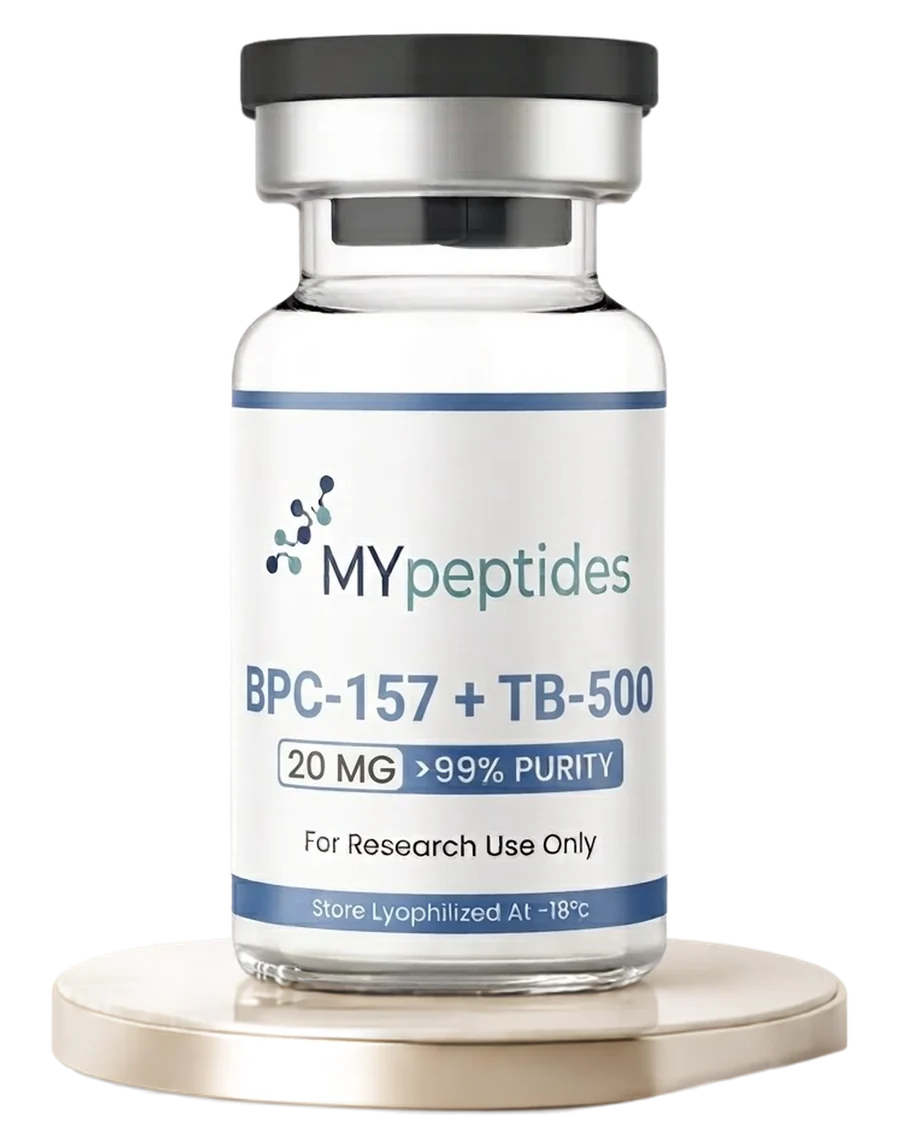
BPC-157 + TB-500 20 mg research peptide vial, >99% purity

Tissue Repair

The Sovereign Recovery Protocol

BPC-157 + TB-500 (Wolverine)

  • 20 mg
  • >99% purity
  • Lyophilised

RM 500

Experience complete cellular restoration. This 20mg master blend unites structural repair with fluid mobility, resetting your body from the inside out.

Key mechanisms & benefits

  • BPC-157 actively reinforces tendons and calms inflammation, restoring deep inner harmony and resilience.
  • TB-500 accelerates muscle recovery and cellular renewal, releasing stiffness to keep your joints beautifully supple.
  • This powerful synergy ensures you stay active, recovered, and glowing through every chapter.
Certificate of Analysis

All products are independently tested by accredited third-party laboratories. Results confirm identity, purity, and potency.

In stock

1
  • No online payment. We confirm your order on WhatsApp.
  • Store lyophilised at −18 °C.
Ask about this product

For research use only. Not for human or veterinary consumption. This product is not a medicine and is not intended to diagnose, treat, cure or prevent any disease.

Overview

Two Repair Peptides, Two Pathways: BPC-157 and TB-500 in One Vial

This 20 mg research blend combines BPC-157 (10 mg) and TB-500 (10 mg). BPC-157 is a 15-amino-acid peptide from a gastric juice protein, studied mainly for angiogenesis and tendon healing. TB-500 is Ac-LKKTETQ, the acetylated actin-binding fragment of thymosin β4.

The two peptides act through different pathways, which is why they are often researched together. Each has improved tendon repair in rat studies. In the one published study testing them side by side in rat Achilles repair (2026), both improved tendon architecture, but combining them gave no additional benefit over either peptide alone.

Mechanism of action

BPC-157

Angiogenesis and Tendon Cells

VEGFR2 signalling and tendon fibroblast activity

  • Up-regulates VEGFR2 and activates the VEGFR2-Akt-eNOS pathway
  • Increases tendon fibroblast migration and survival
  • Up-regulates the growth hormone receptor in tendon fibroblasts
  • Accelerated healing of transected rat Achilles tendon
  • Hsieh MJ et al., 2017; Staresinic M et al., 2003
TB-500

Actin Binding and Cell Migration

The actin-binding fragment of thymosin β4

  • Ac-LKKTETQ is Tβ4's central actin-binding sequence
  • This region promotes angiogenesis, wound healing and cell migration
  • Improved tendon load to failure in rat Achilles repair
  • Metabolised to Ac-LK, Ac-LKK and Ac-LKKTE
  • Sosne G et al., 2010; Biçer O et al., 2026
Combination

Tested Together

What the side-by-side study found

  • 32 rats: control, BPC-157, TB-500 and the combination
  • Both peptides improved histological tendon scores
  • TB-500 significantly increased maximum load to failure
  • The combination did not add benefit over either alone
  • Biçer O et al., Jt Dis Relat Surg, 2026

Key finding In a 2026 rat Achilles repair study, BPC-157 and TB-500 were both associated with improved tendon architecture and matrix organisation, with TB-500 also increasing load to failure; the combination did not confer additional benefit over either peptide alone.

Key research findings

Achilles

BPC-157 accelerated healing of transected rat Achilles tendon and stimulated tendocyte growth in vitro

Staresinic M et al. J Orthop Res, 2003
Load ↑

TB-500 significantly increased maximum load to failure in rat Achilles repair

Biçer O et al. Jt Dis Relat Surg, 2026
No synergy

Combined BPC-157 + TB-500 gave no additional benefit over either peptide alone in the same study

Biçer O et al. Jt Dis Relat Surg, 2026
VEGFR2

BPC-157 up-regulated VEGFR2 and accelerated blood-flow recovery after hind-limb ischaemia in rats

Hsieh MJ et al. J Mol Med, 2017

Research areas

Tendon & Ligament Research

Both peptides have rat tendon repair data, including a direct side-by-side comparison.

  • Achilles tendon repair models
  • Biomechanical load testing
  • Histological scoring
  • Single vs combined protocols

Angiogenesis Research

BPC-157's VEGFR2 pathway and the pro-angiogenic region of thymosin β4.

  • VEGFR2 signalling
  • Ischaemic limb models
  • Endothelial migration
  • Vascular recovery

Wound Healing Research

Thymosin β4 and BPC-157 both have wound and soft-tissue healing literature.

  • Re-epithelialisation models
  • Fibroblast migration
  • Collagen organisation
  • Soft-tissue repair

Combination Research

Testing whether two mechanisms add up, which the first direct study did not find.

  • Synergy study designs
  • Dose-ratio research
  • Component comparisons
  • Single-vial protocols

Safety profile

Both components have preclinical safety literature without toxicity findings, but there are no human safety data for the combination, and BPC-157 has no clinical safety data. The blend is supplied for laboratory research only.

  • Caution
    Pro-angiogenic

    Both components promote angiogenesis; account for this in oncology research designs

  • Caution
    Limited human data

    Evidence is preclinical for both peptides and for the combination

  • Low
    WADA prohibition

    BPC-157 and TB-500 are both on the World Anti-Doping Agency prohibited list

Components
BPC-157 10 mg, TB-500 10 mg
Animal studies
Each improves rat tendon repair
Human data
Not established

Theoretical contraindications in research models

  • Active malignancy: pro-angiogenic components
  • Pregnancy and lactation: no data
  • Any human or veterinary use: research compound only

Molecular profile

BPC-157

Name
Body Protection Compound 157
Sequence
GEPPPGKPADDAGLV
Amino acids
15
Molecular weight
1,419 Da
CAS number
137525-51-0
Origin
Derived from a human gastric juice protein

TB-500

Sequence
Ac-LKKTETQ
Amino acids
7 (N-terminally acetylated)
Molecular weight
≈ 889 Da
Origin
Residues 17–23 of thymosin β4

MYpeptides specification

Strength
20 mg
Composition
BPC-157 10 mg + TB-500 10 mg
Purity
> 99%
Form
Lyophilised powder
Storage
Store lyophilised at −18 °C
Status
For research use only

Frequently asked questions

What is in this blend?

BPC-157 10 mg and TB-500 10 mg in one 20 mg vial. BPC-157 is a 15-amino-acid gastric peptide; TB-500 is Ac-LKKTETQ, the acetylated actin-binding fragment of thymosin β4.

Do BPC-157 and TB-500 work better together?

Not according to the one direct study so far. In a 2026 rat Achilles repair study, both peptides improved tendon structure on their own, but combining them did not give additional benefit over either alone. They do act through different pathways, which is why they are often researched together.

How do the two peptides differ?

BPC-157 is linked to angiogenesis through VEGFR2 and to tendon fibroblast migration and survival. TB-500 comes from the actin-binding region of thymosin β4, which is involved in cell migration and wound healing.

How should the blend be stored?

Lyophilised vials should be stored frozen at −18 °C or below, away from light. Once reconstituted for laboratory use, keep refrigerated at 2–8 °C.

References

  1. Effects of BPC-157 and TB-500 on Achilles tendon healing in rats: A histopathological and biomechanical studyBiçer O et al. Jt Dis Relat Surg, 2026 · PMID: 42542926
  2. Gastric pentadecapeptide BPC 157 accelerates healing of transected rat Achilles tendon and in vitro stimulates tendocytes growthStaresinic M et al. J Orthop Res, 2003 · PMID: 14554208
  3. Therapeutic potential of pro-angiogenic BPC157 is associated with VEGFR2 activation and up-regulationHsieh MJ et al. J Mol Med, 2017 · PMID: 27847966
  4. Biological activities of thymosin beta4 defined by active sites in short peptide sequencesSosne G et al. FASEB J, 2010 · PMID: 20179146
  5. Emerging Use of BPC-157 in Orthopaedic Sports Medicine: A Systematic ReviewVasireddi N et al. HSS J, 2025 · PMID: 40756949
KPV 10 mg research peptide vialImmune

The Anti-Inflammatory Specialist

KPV

10 mg · >99% purity

In stock

RM 250