• 99%+ purity, third-party tested
  • Malaysia-based supplier, fast local delivery
  • Pay by Touch 'n Go QR, confirm on WhatsApp
  • For research use only
  • 99%+ purity, third-party tested
  • Malaysia-based supplier, fast local delivery
  • Pay by Touch 'n Go QR, confirm on WhatsApp
  • For research use only

All products are for laboratory research use only. Not for human consumption.

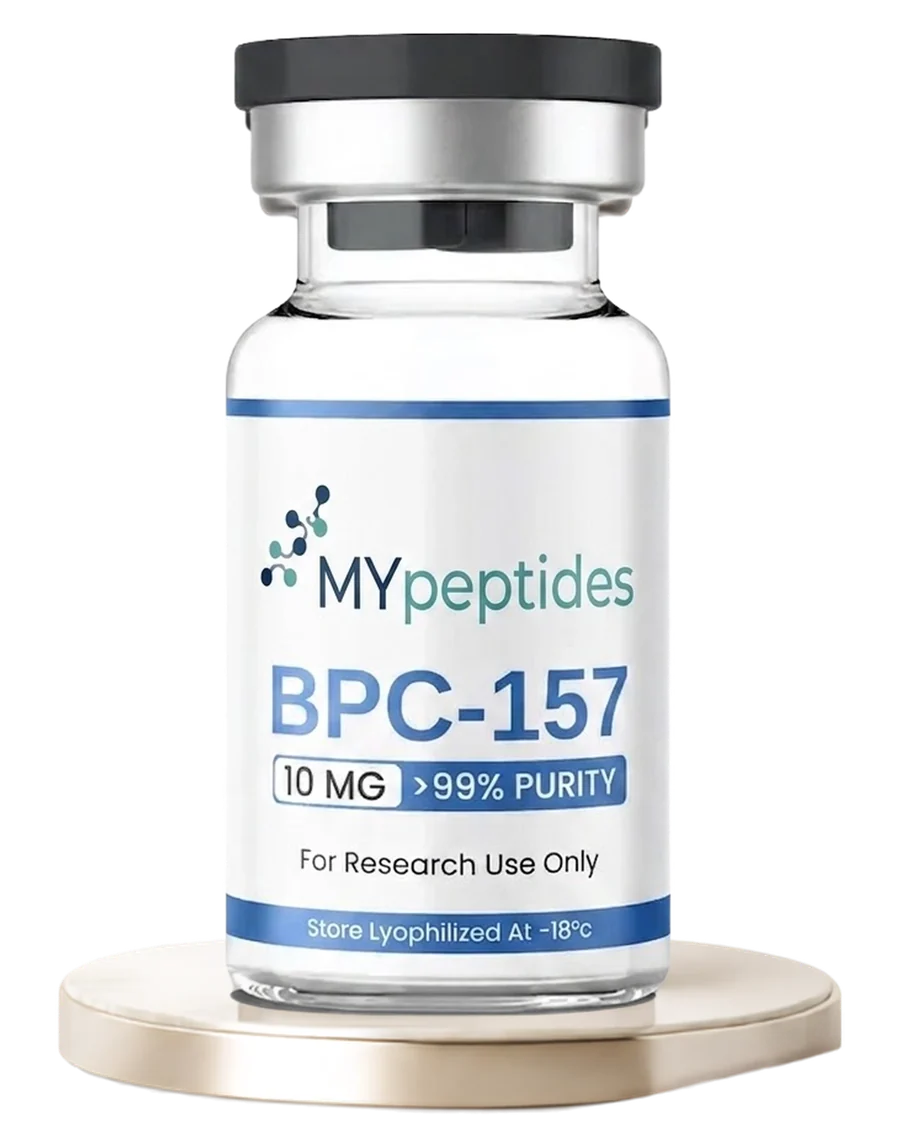
BPC-157 10 mg research peptide vial, >99% purity

Tissue Repair · Tissue Renewal

The Great Repairer

BPC-157

  • 10 mg
  • >99% purity
  • Lyophilised

RM 250

Reclaim your innate healing. BPC-157 10mg sparks cellular renewal, shifting your body from daily wear to systemic vitality.

Key mechanisms & benefits

  • It drives healthy microcirculation, delivering vital nutrients so you stay active, recovered, and radiant.
  • It gently strengthens the gut lining to promote effortless digestion and whole-body ease.
  • It supports the natural repair of tendons, ligaments, and joints after physical stress or training.
Certificate of Analysis

All products are independently tested by accredited third-party laboratories. Results confirm identity, purity, and potency.

In stock

1
  • No online payment. We confirm your order on WhatsApp.
  • Store lyophilised at −18 °C.
Ask about this product

For research use only. Not for human or veterinary consumption. This product is not a medicine and is not intended to diagnose, treat, cure or prevent any disease.

Overview

The Most Studied Repair Peptide: Tendon, Ligament, Muscle and Gut Healing in Preclinical Research

BPC-157 (Body Protection Compound 157) is a synthetic 15-amino-acid peptide (GEPPPGKPADDAGLV) derived from a protein found in human gastric juice. It is among the most widely studied peptides in tissue-repair research, with a large body of animal and cell-culture literature on tendon, ligament, muscle, bone and gastrointestinal healing.

A 2025 systematic review in orthopaedic sports medicine identified 36 eligible studies, 35 of them preclinical, reporting improved functional, structural and biomechanical outcomes in muscle, tendon, ligament and bone injury models. Human data remain limited, which is why BPC-157 is supplied for laboratory research only.

Mechanism of action

Angiogenesis

VEGFR2-Akt-eNOS Signalling

Promotes new blood vessel formation in injured tissue

  • Increases vessel density in chick chorioallantoic membrane and endothelial tube-formation assays
  • Up-regulates VEGFR2 expression in endothelial cells, without raising VEGF-A
  • Promotes VEGFR2 internalisation and activates the VEGFR2-Akt-eNOS pathway
  • Accelerated blood-flow recovery in a rat hind-limb ischaemia model
  • Hsieh MJ et al., J Mol Med, 2017
Tendon Fibroblasts

Outgrowth, Survival and Migration

Acts on the cells that rebuild tendon

  • Accelerated outgrowth of tendon fibroblasts from rat Achilles tendon explants
  • Increased fibroblast survival under oxidative (H₂O₂) stress
  • Dose-dependently increased fibroblast migration and spreading
  • Activated the FAK-paxillin pathway and F-actin formation
  • Chang CH et al., J Appl Physiol, 2011
Growth Hormone Receptor

Sensitising Tendon to Growth Hormone

One of the most up-regulated genes in BPC-157-treated tendon cells

  • cDNA microarray identified growth hormone receptor as strongly up-regulated
  • Dose- and time-dependent increase at both mRNA and protein level
  • Added growth hormone then increased fibroblast proliferation
  • Downstream JAK2 signalling activated
  • Chang CH et al., Molecules, 2014

Key finding In rats with a transected Achilles tendon, BPC-157 accelerated healing, and in vitro it stimulated tendocyte growth. Follow-up work traced the effect to fibroblast migration and survival (FAK-paxillin), growth hormone receptor up-regulation and VEGFR2-driven angiogenesis.

Key research findings

36 studies

Systematic review in orthopaedic sports medicine: 35 preclinical and 1 clinical study, with improved outcomes in muscle, tendon, ligament and bone injury models

Vasireddi N et al. HSS J, 2025
Achilles

Accelerated healing of transected rat Achilles tendon and stimulated tendocyte growth in vitro

Staresinic M et al. J Orthop Res, 2003
VEGFR2

Up-regulated VEGFR2 and activated VEGFR2-Akt-eNOS signalling, accelerating blood-flow recovery after hind-limb ischaemia in rats

Hsieh MJ et al. J Mol Med, 2017
<30 min

Reported half-life; metabolised in the liver and cleared by the kidneys

Vasireddi N et al. HSS J, 2025

Research areas

Tendon & Ligament Research

The core of the BPC-157 literature: transected tendon and ligament models, tendon fibroblast biology and biomechanical recovery.

  • Achilles tendon transection models
  • Tendon fibroblast migration and survival
  • Ligament healing studies
  • Growth hormone receptor signalling in tendon

Muscle & Bone Research

Preclinical studies report improved functional and structural outcomes after muscle and bone injury.

  • Muscle crush and transection models
  • Fracture and bone healing studies
  • Myotendinous junction research
  • Functional recovery measures

Gastrointestinal Research

BPC-157 originates from gastric juice, and its earliest literature covers mucosal protection and gut-lesion healing across the GI tract.

  • Gastric and duodenal lesion models
  • Oesophageal and colonic injury models
  • Mucosal integrity studies
  • Fistula healing research

Angiogenesis Research

A well-characterised pro-angiogenic mechanism via VEGFR2, relevant to any repair model that depends on blood supply.

  • VEGFR2-Akt-eNOS signalling
  • Ischaemic limb models
  • Endothelial tube formation assays
  • Vascular recovery studies

Safety profile

Preclinical safety studies have not shown adverse effects across several organ systems, but the 2025 systematic review found no clinical safety data. Human use is unstudied and unapproved, which is why BPC-157 is supplied strictly for laboratory research.

  • Caution
    Pro-angiogenic

    Promotes new blood vessel formation; account for this in oncology-related research designs

  • Caution
    Limited human data

    One small retrospective clinical study; no controlled human trials of safety

  • Low
    Short half-life

    Reported half-life under 30 minutes; relevant to the timing of research protocols

  • Low
    WADA prohibition

    BPC-157 is on the World Anti-Doping Agency prohibited list

Animal studies
Large literature; no toxicity findings reported
Human data
One small retrospective study
Regulatory status
Unapproved; research use only

Theoretical contraindications in research models

  • Active malignancy: pro-angiogenic activity
  • Pregnancy and lactation: no data
  • Any human or veterinary use: research compound only

Molecular profile

Molecular profile

Name
Body Protection Compound 157
Sequence
GEPPPGKPADDAGLV
Amino acids
15
Molecular weight
1,419 Da
CAS number
137525-51-0
Origin
Derived from human gastric juice protein

MYpeptides specification

Strength
10 mg
Purity
> 99%
Form
Lyophilised powder
Storage
Store lyophilised at −18 °C
Status
For research use only

Frequently asked questions

What does the research on BPC-157 actually show?

Most of the evidence is preclinical. A 2025 systematic review found 36 eligible studies, 35 in animals or cells, reporting improved healing of muscle, tendon, ligament and bone injuries. The mechanisms described include angiogenesis through VEGFR2, increased tendon fibroblast migration and survival, and up-regulation of the growth hormone receptor in tendon cells.

Has BPC-157 been studied in humans?

Only to a very limited extent. One small retrospective study reviewed patients given intra-articular BPC-157 for knee pain and reported that 11 of 12 had improvement, but it had no control group and used a phone survey rather than standard measures. There are no controlled human trials of safety or efficacy, and BPC-157 is not an approved medicine.

Why does BPC-157 come from gastric juice?

BPC-157 is a partial sequence of a larger body protection compound first isolated from human gastric juice. Its earliest research focused on protecting and healing the stomach and gut lining, and later work extended this to tendon, ligament, muscle and bone.

How is BPC-157 different from TB-500?

They work through different pathways. BPC-157 is linked to angiogenesis via VEGFR2 and to tendon fibroblast activity, while TB-500 is related to thymosin beta-4, which regulates actin and cell migration. Because the mechanisms are complementary, the two are often studied together, which is why we also supply a BPC-157 + TB-500 blend.

How should BPC-157 be stored?

Lyophilised vials should be stored frozen at −18 °C or below, away from light. Once reconstituted for laboratory use with bacteriostatic water, keep refrigerated at 2–8 °C.

Is BPC-157 allowed in sport?

No. BPC-157 is on the World Anti-Doping Agency prohibited list. Our products are supplied for laboratory research only and are not for human or veterinary use.

References

  1. Emerging Use of BPC-157 in Orthopaedic Sports Medicine: A Systematic ReviewVasireddi N et al. HSS J, 2025 · PMID: 40756949
  2. Gastric pentadecapeptide BPC 157 accelerates healing of transected rat Achilles tendon and in vitro stimulates tendocytes growthStaresinic M et al. J Orthop Res, 2003 · PMID: 14554208
  3. The promoting effect of pentadecapeptide BPC 157 on tendon healing involves tendon outgrowth, cell survival, and cell migrationChang CH et al. J Appl Physiol, 2011 · PMID: 21030672
  4. Pentadecapeptide BPC 157 enhances the growth hormone receptor expression in tendon fibroblastsChang CH et al. Molecules, 2014 · PMID: 25415472
  5. Therapeutic potential of pro-angiogenic BPC157 is associated with VEGFR2 activation and up-regulationHsieh MJ et al. J Mol Med, 2017 · PMID: 27847966
  6. BPC 157 and Standard Angiogenic Growth Factors. Gastrointestinal Tract Healing, Lessons from Tendon, Ligament, Muscle and Bone HealingSeiwerth S et al. Curr Pharm Des, 2018 · PMID: 29998800
KPV 10 mg research peptide vialImmune

The Anti-Inflammatory Specialist

KPV

10 mg · >99% purity

In stock

RM 250
R3 20 mg research peptide vialMetabolic

The Triple Agonist

R3

20 mg · >99% purity

In stock

RM 650