• 99%+ purity, third-party tested
  • Malaysia-based supplier, fast local delivery
  • Pay by Touch 'n Go QR, confirm on WhatsApp
  • For research use only
  • 99%+ purity, third-party tested
  • Malaysia-based supplier, fast local delivery
  • Pay by Touch 'n Go QR, confirm on WhatsApp
  • For research use only

All products are for laboratory research use only. Not for human consumption.

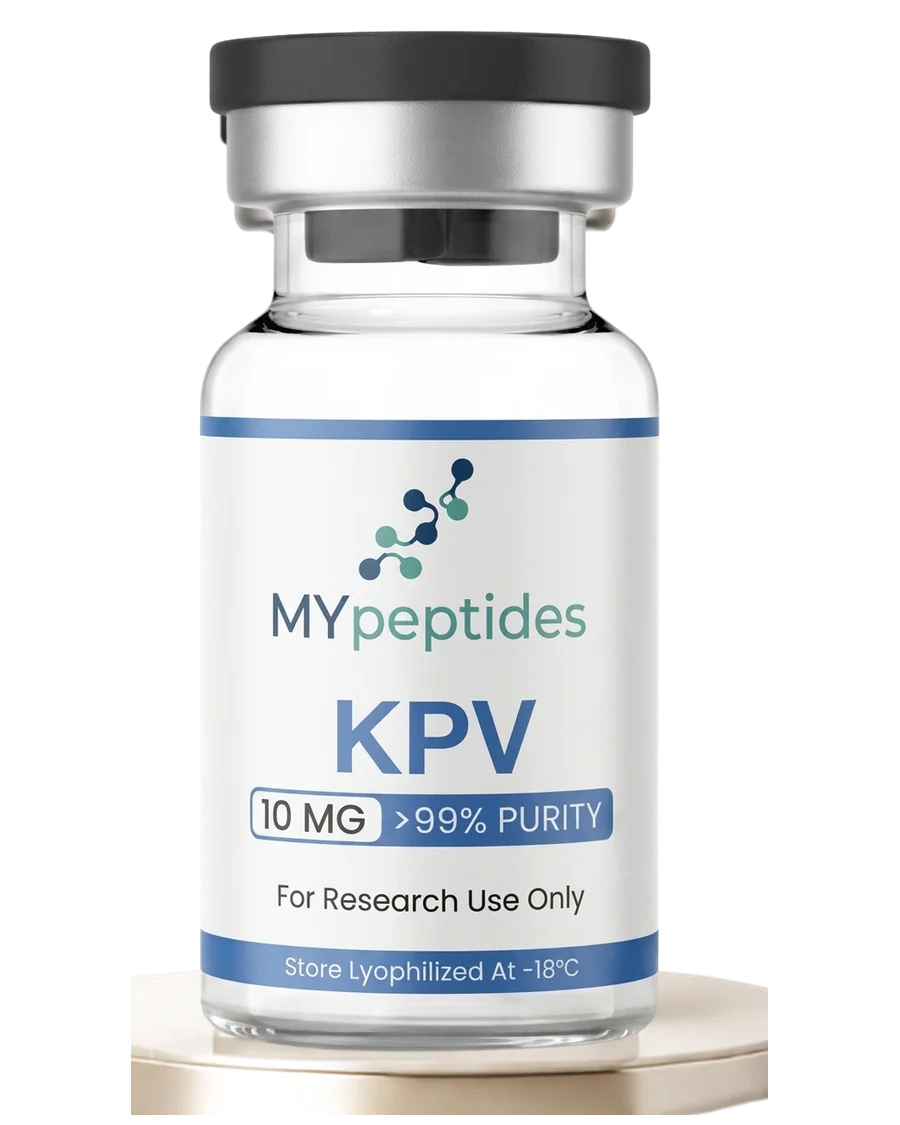
KPV 10 mg research peptide vial, >99% purity

Immune · Immune Modulator

The Anti-Inflammatory Specialist

KPV

  • 10 mg
  • >99% purity
  • Lyophilised

RM 250

Cool the inner fire. KPV 10 mg is a master soothing peptide, gently quieting deep cellular reactivity for absolute systemic calm.

Key mechanisms & benefits

  • By calming immune responses at the surface, it fades visible redness for a flawlessly peaceful complexion.
  • It targets digestive stress, easing internal friction to rebuild a resilient, beautifully balanced inner foundation.
  • Deeply restored and unbothered, you move through your world with total inner ease and an effortless glow.
Certificate of Analysis

All products are independently tested by accredited third-party laboratories. Results confirm identity, purity, and potency.

In stock

1
  • No online payment. We confirm your order on WhatsApp.
  • Store lyophilised at −18 °C.
Ask about this product

For research use only. Not for human or veterinary consumption. This product is not a medicine and is not intended to diagnose, treat, cure or prevent any disease.

Overview

The Anti-Inflammatory Core of α-MSH: Three Amino Acids, No Pigmentation

KPV (Lys-Pro-Val) is the C-terminal tripeptide of alpha-melanocyte-stimulating hormone (α-MSH, positions 11-13). α-MSH has potent anti-inflammatory effects, but it also causes pigmentation. KPV keeps much of the anti-inflammatory activity without the pigmentary effect, which made it a focus of inflammation research.

Most KPV research is in models of intestinal inflammation. In mice, KPV reduced colitis in several models, and it is taken up by intestinal and immune cells through the PepT1 peptide transporter, which is induced in the colon during inflammatory bowel disease.

Mechanism of action

NF-κB Inhibition

Damping Inflammatory Signalling

Nanomolar KPV inhibits core inflammatory pathways

  • Inhibits NF-κB activation in intestinal epithelial and immune cells
  • Inhibits MAP kinase inflammatory signalling
  • Reduces pro-inflammatory cytokine secretion
  • Active at nanomolar concentrations in cell studies
  • Dalmasso G et al., Gastroenterology, 2008
PepT1 Transport

Entry Into Gut and Immune Cells

Taken up by the di/tripeptide transporter PepT1

  • PepT1 is normally expressed in the small intestine
  • PepT1 is induced in the colon during inflammatory bowel disease
  • KPV's anti-inflammatory effect is mediated through PepT1
  • Works in both intestinal epithelial cells and T cells
  • Dalmasso G et al., Gastroenterology, 2008
Melanocortin Biology

α-MSH Activity Without Pigmentation

The anti-inflammatory fragment of a well-studied hormone

  • α-MSH affects NF-κB, adhesion molecules, cytokines, IL-10 and T-cell activity
  • α-MSH's use is limited by its pigmentary effect
  • KPV preserves anti-inflammatory activity without pigmentation
  • Effects persisted in mice lacking a functional melanocortin-1 receptor
  • Brzoska T et al., Endocr Rev, 2008; Kannengiesser K et al., 2008

Key finding In two mouse models of inflammatory bowel disease, KPV led to earlier recovery, stronger regain of body weight and significantly reduced inflammatory infiltrates. In mice lacking a functional melanocortin-1 receptor, KPV rescued all treated animals from death during DSS colitis.

Key research findings

NF-κB

Nanomolar KPV inhibited NF-κB and MAP kinase signalling and reduced pro-inflammatory cytokine secretion, acting through PepT1

Dalmasso G et al. Gastroenterology, 2008
Oral

KPV given in drinking water reduced DSS- and TNBS-induced colitis in mice

Dalmasso G et al. Gastroenterology, 2008
2 models

Earlier recovery, weight regain and reduced inflammatory infiltrates in DSS and transfer colitis models

Kannengiesser K et al. Inflamm Bowel Dis, 2008
Targeted

KPV in hyaluronic acid-functionalised nanoparticles accelerated mucosal healing and reduced TNF-α in a mouse ulcerative colitis model

Xiao B et al. Mol Ther, 2017

Research areas

Inflammatory Bowel Research

The most developed area of KPV research, across several mouse colitis models.

  • DSS- and TNBS-induced colitis
  • Transfer colitis models
  • Mucosal healing studies
  • PepT1 transporter research

Inflammation Signalling

Cell studies on how KPV damps NF-κB and MAP kinase pathways.

  • NF-κB pathway research
  • Cytokine secretion studies
  • Intestinal epithelial cell models
  • T-cell signalling studies

Skin Inflammation Research

α-MSH and its fragments have been studied in models of contact dermatitis and skin inflammation.

  • Melanocortin biology in skin
  • Irritant and allergic dermatitis models
  • Wound inflammation studies
  • Combination blends with GHK-Cu (see KLOW)

Drug Delivery Research

KPV is a model cargo for targeted oral delivery to the inflamed colon.

  • Hyaluronic acid nanoparticles
  • Hydrogel-encapsulated delivery
  • Macrophage and epithelial targeting
  • Oral bioavailability studies

Safety profile

KPV is a fragment of an endogenous hormone. Nanoparticle formulations were nontoxic and biocompatible with intestinal cells in research models. Human data are lacking, and KPV is supplied for laboratory research only.

  • Low
    Immunomodulation

    Damps inflammatory signalling; account for this in infection and immunology research designs

  • Caution
    Limited human data

    Evidence comes from cell and animal models

  • Low
    Pigmentation

    Lacks α-MSH's pigmentary effect in the literature

Animal studies
Anti-inflammatory in several colitis models
Human data
Not established
Endogenous origin
C-terminal fragment of α-MSH

Theoretical contraindications in research models

  • Active infection research where immune suppression would confound results
  • Pregnancy and lactation: no data
  • Any human or veterinary use: research compound only

Molecular profile

Molecular profile

Sequence
Lys-Pro-Val
Amino acids
3
Molecular weight
342.4 Da
CAS number
67727-97-3
Origin
C-terminal fragment of α-MSH

MYpeptides specification

Strength
10 mg
Purity
> 99%
Form
Lyophilised powder
Storage
Store lyophilised at −18 °C
Status
For research use only

Frequently asked questions

What is KPV?

KPV is the tripeptide Lys-Pro-Val, the last three amino acids of alpha-melanocyte-stimulating hormone (α-MSH). It keeps much of α-MSH's anti-inflammatory activity without the effect on pigmentation.

What has KPV been studied for?

Mainly intestinal inflammation. In mouse models of colitis, KPV reduced inflammation, sped recovery and improved weight regain. Cell studies show it inhibits NF-κB and MAP kinase signalling and lowers pro-inflammatory cytokines.

How does KPV get into cells?

Through PepT1, a transporter for small peptides. PepT1 is normally found in the small intestine and is induced in the colon during inflammatory bowel disease, which is one reason KPV is studied in gut inflammation.

Does KPV need the melanocortin receptor to work?

Not entirely. In mice lacking a functional melanocortin-1 receptor, KPV still rescued all treated animals during DSS colitis, which suggests other routes, such as PepT1 uptake, contribute to its effect.

How should KPV be stored?

Lyophilised vials should be stored frozen at −18 °C or below, away from light. Once reconstituted for laboratory use, keep refrigerated at 2–8 °C.

References

  1. PepT1-mediated tripeptide KPV uptake reduces intestinal inflammationDalmasso G et al. Gastroenterology, 2008 · PMID: 18061177
  2. Melanocortin-derived tripeptide KPV has anti-inflammatory potential in murine models of inflammatory bowel diseaseKannengiesser K et al. Inflamm Bowel Dis, 2008 · PMID: 18092346
  3. Alpha-melanocyte-stimulating hormone and related tripeptides: biochemistry, antiinflammatory and protective effects in vitro and in vivo, and future perspectives for the treatment of immune-mediated inflammatory diseasesBrzoska T et al. Endocr Rev, 2008 · PMID: 18612139
  4. Orally Targeted Delivery of Tripeptide KPV via Hyaluronic Acid-Functionalized Nanoparticles Efficiently Alleviates Ulcerative ColitisXiao B et al. Mol Ther, 2017 · PMID: 28143741