• 99%+ purity, third-party tested
  • Malaysia-based supplier, fast local delivery
  • Pay by Touch 'n Go QR, confirm on WhatsApp
  • For research use only
  • 99%+ purity, third-party tested
  • Malaysia-based supplier, fast local delivery
  • Pay by Touch 'n Go QR, confirm on WhatsApp
  • For research use only

All products are for laboratory research use only. Not for human consumption.

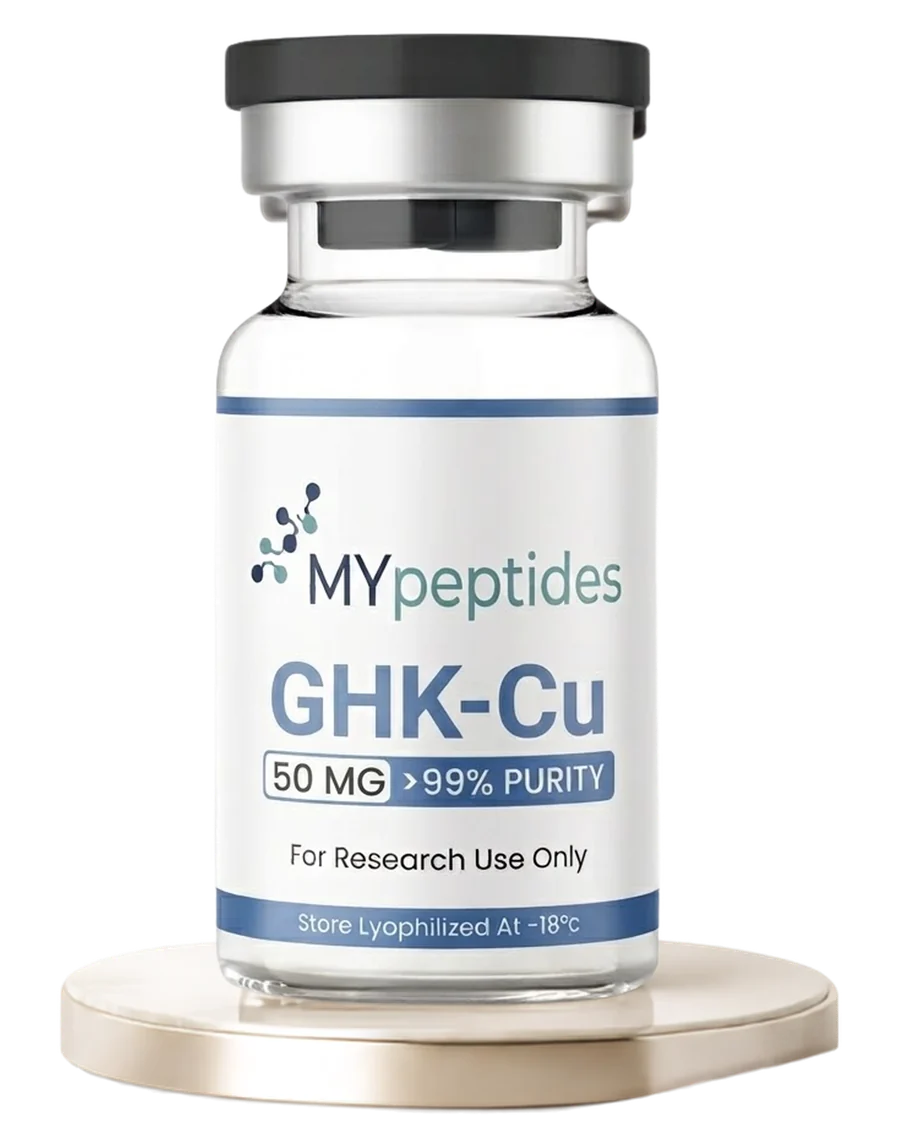
GHK-Cu 50 mg research peptide vial, >99% purity

Skin & Aesthetics · Regenerative - Anti-Aging

The Skin & Tissue Remodeler

GHK-Cu

  • 50 mg
  • >99% purity
  • Lyophilised

RM 360

Unlock your sovereign radiance. GHK-Cu 50 mg is the ultimate beauty peptide, resetting your skin’s architecture from the cell up.

Key mechanisms & benefits

  • It powerfully stimulates collagen and elastin, smoothing texture and restoring a naturally lifted, sculpted appearance.
  • By promoting fresh cellular pathways, it delivers vital nutrients to the surface, leaving your complexion brilliantly even and deeply nourished.
  • Reclaim your skin’s resilience, fade visible fatigue, and glow with an effortlessly ageless aura.
Certificate of Analysis

All products are independently tested by accredited third-party laboratories. Results confirm identity, purity, and potency.

In stock

1
  • No online payment. We confirm your order on WhatsApp.
  • Store lyophilised at −18 °C.
Ask about this product

For research use only. Not for human or veterinary consumption. This product is not a medicine and is not intended to diagnose, treat, cure or prevent any disease.

Overview

The Copper Tripeptide From Human Plasma: Collagen, Remodelling and Repair

GHK-Cu is the copper(II) complex of the tripeptide glycyl-L-histidyl-L-lysine. GHK was isolated from human plasma, is also found in saliva and urine, and declines with age. Its affinity for copper is similar to the copper transport site on albumin.

GHK-Cu is one of the most studied peptides in skin and tissue-remodelling research. In fibroblast culture it stimulated collagen synthesis at concentrations as low as 10⁻¹² M, and in animal models it accelerated healing of skin and other tissues. Reviews by its discoverer's group report that GHK can up- and down-regulate at least 4,000 human genes.

Mechanism of action

Collagen Synthesis

Stimulating the Extracellular Matrix

Increases collagen and matrix production by fibroblasts

  • Stimulated collagen synthesis from 10⁻¹² M, maximal at 10⁻⁹ M
  • Effect independent of any change in cell number
  • A GHK sequence exists in type I collagen, possibly released at wounds
  • Also increases elastin and glycosaminoglycans
  • Maquart FX et al., FEBS Lett, 1988
Tissue Remodelling

Balancing Build-Up and Breakdown

Regulates both synthesis and breakdown of matrix

  • Stimulates both synthesis and breakdown of collagen and glycosaminoglycans
  • Modulates metalloproteinases and their inhibitors
  • Attracts immune and endothelial cells to sites of injury
  • Stimulates decorin production
  • Pickart L et al., Biomed Res Int, 2015
Gene Expression

Broad Effects on Gene Activity

Reported to shift the expression of thousands of genes

  • Reported to up- and down-regulate at least 4,000 human genes
  • Associated with antioxidant, anti-inflammatory and DNA-repair pathways
  • Studied in cells from COPD and cancer patients
  • Gene data come from connectivity-map analyses
  • Pickart L, Margolina A, Int J Mol Sci, 2018

Key finding In fibroblast cultures, GHK-Cu stimulated collagen synthesis starting at 10⁻¹²–10⁻¹¹ M and peaking at 10⁻⁹ M, independent of cell proliferation, making it one of the most potent known stimulators of collagen production.

Key research findings

10⁻⁹ M

Collagen synthesis stimulation began at 10⁻¹²–10⁻¹¹ M and peaked at 10⁻⁹ M in fibroblast cultures

Maquart FX et al. FEBS Lett, 1988
4,000+

Genes reported to be up- or down-regulated by GHK in gene-expression analyses

Pickart L et al. Biomed Res Int, 2015
ACL

Intra-articular GHK-Cu reduced knee laxity and increased graft stiffness at 6 weeks after ACL reconstruction in rats, though benefits faded after treatment stopped

Fu SC et al. J Orthop Res, 2015
Age

GHK is present in human plasma, saliva and urine and declines with age

Pickart L et al. Biomed Res Int, 2015

Research areas

Skin & Collagen Research

The core of GHK-Cu research: fibroblasts, collagen and skin remodelling.

  • Fibroblast collagen synthesis
  • Elastin and glycosaminoglycans
  • Skin remodelling models
  • Photoaging research

Wound Healing Research

Accelerated healing in skin, hair follicle, gut and bone models across several species.

  • Dermal wound models
  • Irradiated wound healing
  • Hair follicle studies
  • Systemic wound healing in rats, mice and pigs

Gene Expression Research

Studies of GHK's broad effects on gene activity.

  • Connectivity-map analyses
  • Antioxidant gene pathways
  • DNA repair genes
  • COPD fibroblast studies

Musculoskeletal Research

Tested in ligament graft healing in rats, with transient benefit.

  • ACL reconstruction models
  • Graft stiffness
  • Bone tissue healing
  • Intra-articular delivery

Safety profile

GHK is a naturally occurring human plasma peptide and is widely used in topical cosmetic products. Systemic human safety data are limited, and this product is supplied for laboratory research only.

  • Low
    Copper content

    Delivers copper; consider copper metabolism endpoints at high doses

  • Low
    Pro-regenerative activity

    Stimulates cell growth and angiogenesis; note in oncology research designs

  • Low
    Metal interactions

    May interact with other metal-chelating compounds

Cell studies
Potent collagen stimulation
Animal studies
Accelerated healing in several models
Endogenous
Human plasma peptide

Theoretical contraindications in research models

  • Wilson disease or copper metabolism disorders
  • Concurrent copper chelation therapy
  • Any human or veterinary use: research compound only

Molecular profile

GHK-Cu Structure

Full name
Glycyl-L-histidyl-L-lysine copper(II)
Sequence
Gly-His-Lys · Cu²⁺
Molecular weight
340.4 Da (GHK)
CAS number
49557-75-7
Discovery
Isolated from human plasma (Pickart, 1973)
Endogenous
Yes: plasma, saliva and urine

Biological Activity

Collagen synthesis
Stimulated from 10⁻¹² M, maximal at 10⁻⁹ M
Copper affinity
Similar to albumin's copper transport site
Genes
At least 4,000 reported up- or down-regulated
Age
Plasma levels decline with age

MYpeptides specification

Strength
50 mg
Purity
> 99%
Form
Lyophilised powder
Storage
Store lyophilised at −18 °C
Status
For research use only

Frequently asked questions

What is GHK-Cu?

GHK-Cu is the copper complex of the tripeptide glycyl-L-histidyl-L-lysine, a peptide naturally found in human plasma, saliva and urine. It binds copper with an affinity similar to albumin's copper transport site.

How does GHK-Cu affect collagen?

In fibroblast cultures it stimulated collagen synthesis at extremely low concentrations, beginning around 10⁻¹² M and peaking at 10⁻⁹ M, without changing cell numbers. It also regulates the breakdown of collagen, which is important for tissue remodelling rather than just build-up.

Does GHK-Cu really affect 4,000 genes?

That figure comes from reviews by Pickart and colleagues, based on analyses of how GHK shifts gene-expression patterns. It indicates broad effects on gene activity, including antioxidant and repair pathways, but it comes mainly from one research group's analyses.

Why 50 mg per vial?

GHK-Cu is used across a wide range of concentrations in research, from nanomolar cell studies to higher-concentration protocols. A 50 mg vial gives flexibility and consistent stock for longer projects.

How should GHK-Cu be stored?

Lyophilised vials should be stored frozen at −18 °C or below, away from light. Once reconstituted for laboratory use, keep refrigerated at 2–8 °C.

References

  1. Stimulation of collagen synthesis in fibroblast cultures by the tripeptide-copper complex glycyl-L-histidyl-L-lysine-Cu2+Maquart FX et al. FEBS Lett, 1988 · PMID: 3169264
  2. The human tri-peptide GHK and tissue remodelingPickart L J Biomater Sci Polym Ed, 2008 · PMID: 18644225
  3. GHK Peptide as a Natural Modulator of Multiple Cellular Pathways in Skin RegenerationPickart L et al. Biomed Res Int, 2015 · PMID: 26236730
  4. Regenerative and Protective Actions of the GHK-Cu Peptide in the Light of the New Gene DataPickart L, Margolina A Int J Mol Sci, 2018 · PMID: 29986520
  5. Tripeptide-copper complex GHK-Cu (II) transiently improved healing outcome in a rat model of ACL reconstructionFu SC et al. J Orthop Res, 2015 · PMID: 25731775
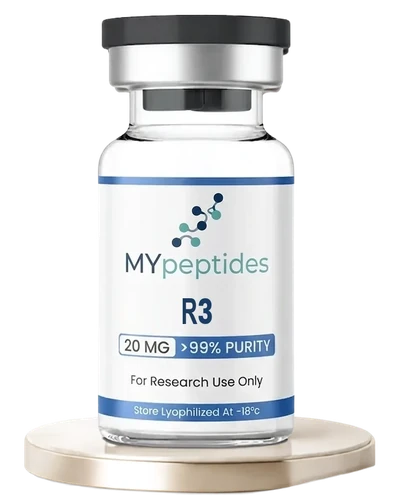
R3 20 mg research peptide vialMetabolic

The Triple Agonist

R3

20 mg · >99% purity

In stock

RM 650