• 99%+ purity, third-party tested
  • Malaysia-based supplier, fast local delivery
  • Pay by Touch 'n Go QR, confirm on WhatsApp
  • For research use only
  • 99%+ purity, third-party tested
  • Malaysia-based supplier, fast local delivery
  • Pay by Touch 'n Go QR, confirm on WhatsApp
  • For research use only

All products are for laboratory research use only. Not for human consumption.

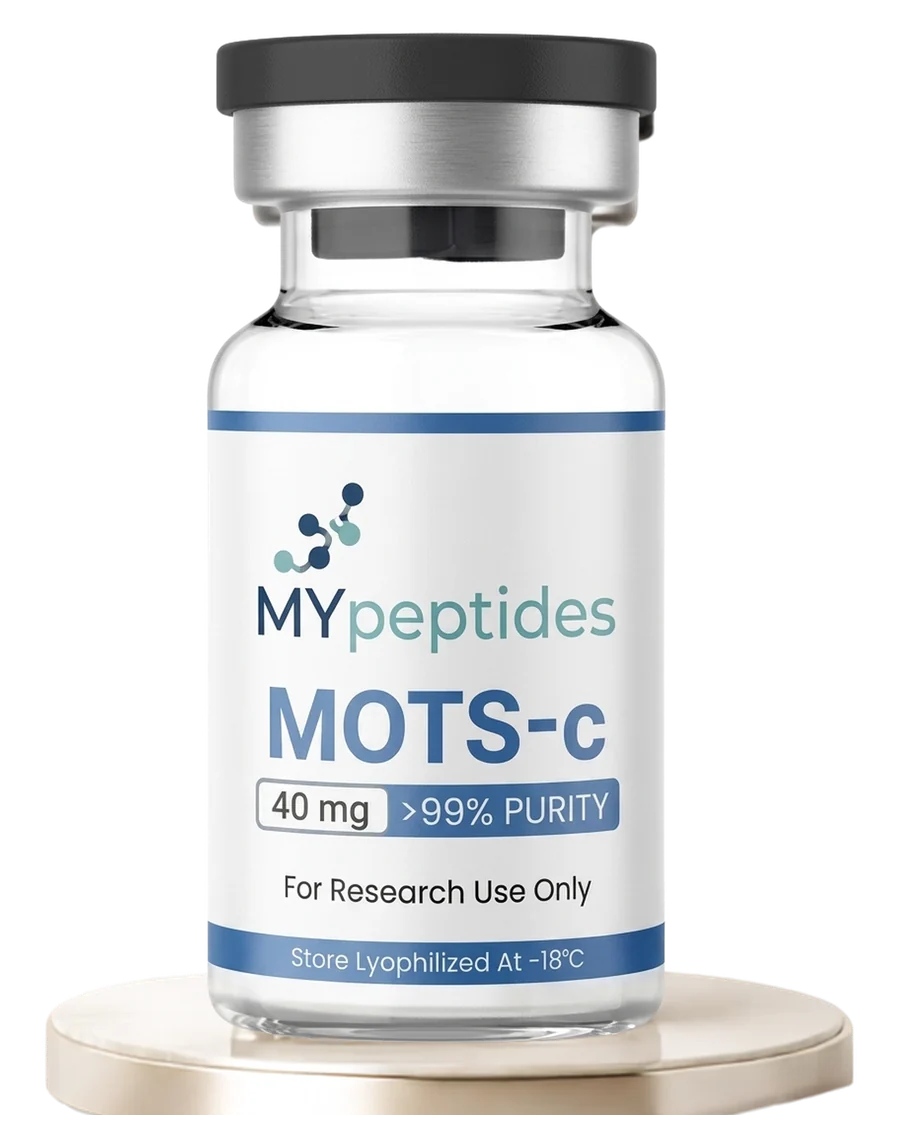
MOTS-c 40 mg research peptide vial, >99% purity

Longevity · Longevity Metabolic

The Metabolic Catalyst

MOTS-c

  • 40 mg
  • >99% purity
  • Lyophilised

RM 480

Awaken your cellular powerhouse. MOTS-c 40 mg ignites mitochondrial vitality, resetting your metabolism from the very source of your energy.

Key mechanisms & benefits

  • By mimicking the benefits of movement, it boosts endurance so you stay active, vibrant, and deeply recovered.
  • It optimizes glucose utilization and fat burning, granting you effortless control and steady, all-day vitality.
  • It neutralizes oxidative stress to protect your cells, leaving you glowing, resilient, and beautifully ageless.
Certificate of Analysis

All products are independently tested by accredited third-party laboratories. Results confirm identity, purity, and potency.

In stock

1
  • No online payment. We confirm your order on WhatsApp.
  • Store lyophilised at −18 °C.
Ask about this product

For research use only. Not for human or veterinary consumption. This product is not a medicine and is not intended to diagnose, treat, cure or prevent any disease.

Overview

A Peptide Encoded in Mitochondrial DNA: Metabolism, Exercise and Ageing

MOTS-c (mitochondrial open reading frame of the 12S rRNA type-c) is a 16-amino-acid peptide encoded in a short open reading frame of mitochondrial DNA, within the 12S rRNA gene. It was described in 2015, after humanin, as a second signalling peptide encoded by mitochondrial DNA.

In mice, MOTS-c prevented diet-induced obesity and insulin resistance, acting mainly on skeletal muscle through AMPK. Under metabolic stress it moves into the cell nucleus to regulate gene expression, and it improved physical performance in young, middle-aged and old mice. In humans, exercise increases MOTS-c in muscle and in circulation.

Mechanism of action

AMPK Activation

Muscle Metabolism

Acts mainly on skeletal muscle

  • Inhibits the folate cycle and de novo purine synthesis
  • This leads to AMPK activation
  • Skeletal muscle appears to be the primary target organ
  • Regulates insulin sensitivity and metabolic homeostasis
  • Lee C et al., Cell Metab, 2015
Nuclear Signalling

Mitochondria Talking to the Nucleus

Moves into the nucleus under metabolic stress

  • Translocates to the nucleus after metabolic stress
  • Translocation is AMPK-dependent
  • Regulates genes with antioxidant response elements
  • Interacts with the stress-responsive factor NRF2
  • Kim KH et al., Cell Metab, 2018
Exercise & Ageing

Physical Capacity

Improved physical performance across ages in mice

  • Enhanced physical performance in young, middle-aged and old mice
  • Late-life treatment increased physical capacity and healthspan
  • Regulated metabolic and proteostasis genes
  • Exercise raises MOTS-c in human muscle and blood
  • Reynolds JC et al., Nat Commun, 2021

Key finding MOTS-c, a 16-amino-acid peptide encoded in mitochondrial DNA, acts on skeletal muscle through AMPK and prevented age-dependent and high-fat-diet-induced insulin resistance, as well as diet-induced obesity, in mice.

Key research findings

16 aa

Encoded in the mitochondrial 12S rRNA gene; prevented diet-induced obesity and insulin resistance in mice

Lee C et al. Cell Metab, 2015
Nucleus

Translocates to the nucleus under metabolic stress and regulates antioxidant-response genes with NRF2

Kim KH et al. Cell Metab, 2018
All ages

Enhanced physical performance in young (2 mo), middle-aged (12 mo) and old (22 mo) mice

Reynolds JC et al. Nat Commun, 2021
Exercise

In humans, exercise induced MOTS-c expression in skeletal muscle and in circulation

Reynolds JC et al. Nat Commun, 2021

Research areas

Metabolic Research

Insulin sensitivity, obesity and muscle glucose metabolism.

  • Diet-induced obesity models
  • Insulin resistance
  • AMPK signalling
  • Folate cycle and purine metabolism

Exercise Research

MOTS-c rises with exercise and improves physical capacity in mice.

  • Physical performance
  • Muscle adaptation
  • Exercise-induced signalling
  • Endurance studies

Ageing Research

Physical decline and healthspan in old mice.

  • Late-life treatment studies
  • Age-dependent insulin resistance
  • Healthspan endpoints
  • Muscle homeostasis

Mitochondrial Biology

Mitochondrial-encoded peptides and mitonuclear communication.

  • Mitochondrial open reading frames
  • Nuclear gene regulation
  • NRF2 and antioxidant responses
  • Comparison with humanin

Safety profile

MOTS-c is an endogenous peptide, and exercise raises its levels in humans. Published studies of administered MOTS-c are in cells and animals. Supplied for laboratory research only.

  • Low
    Metabolic effects

    Affects insulin sensitivity and glucose metabolism; monitor metabolic endpoints

  • Caution
    No human trials

    Administered MOTS-c has not been tested in published human trials

  • Low
    Endogenous

    Naturally produced; levels rise with exercise

Animal studies
Metabolic and physical benefits in mice
Human data
Endogenous levels only
Endogenous
Mitochondrial-encoded

Theoretical contraindications in research models

  • Pregnancy and lactation: no data
  • Research involving glucose-lowering agents: account for additive effects
  • Any human or veterinary use: research compound only

Molecular profile

MOTS-c Structure

Full name
Mitochondrial open reading frame of the 12S rRNA type-c
Amino acids
16
Molecular weight
≈ 2,174 Da
Genomic origin
Mitochondrial 12S rRNA gene
Discovered
2015 (Lee C et al.)

Biological Properties

Primary target
Skeletal muscle
Pathway
Folate cycle inhibition, AMPK activation
Nuclear action
Translocates to the nucleus under metabolic stress
Exercise response
Rises in human muscle and blood with exercise

MYpeptides specification

Strength
40 mg
Purity
> 99%
Form
Lyophilised powder
Storage
Store lyophilised at −18 °C
Status
For research use only

Frequently asked questions

What is MOTS-c?

MOTS-c is a 16-amino-acid peptide encoded in mitochondrial DNA, inside the 12S rRNA gene. It was described in 2015 as a signalling peptide that regulates metabolism, mainly in skeletal muscle.

Is MOTS-c the only peptide encoded by mitochondrial DNA?

No. Humanin was identified earlier as a mitochondrial-encoded peptide, and its discovery prompted the search that found MOTS-c. Both belong to a growing family of mitochondrial-derived peptides.

What has MOTS-c been shown to do?

In mice, it prevented diet-induced obesity and insulin resistance, improved physical performance at all ages, and when started late in life increased physical capacity and healthspan. In cells under metabolic stress, it moves into the nucleus and regulates antioxidant-response genes.

Does exercise affect MOTS-c?

Yes. In humans, exercise increased MOTS-c expression in skeletal muscle and in circulation.

How should MOTS-c be stored?

Lyophilised vials should be stored frozen at −18 °C or below, away from light. Once reconstituted for laboratory use, keep refrigerated at 2–8 °C.

References

  1. The mitochondrial-derived peptide MOTS-c promotes metabolic homeostasis and reduces obesity and insulin resistanceLee C et al. Cell Metab, 2015 · PMID: 25738459
  2. The Mitochondrial-Encoded Peptide MOTS-c Translocates to the Nucleus to Regulate Nuclear Gene Expression in Response to Metabolic StressKim KH et al. Cell Metab, 2018 · PMID: 29983246
  3. MOTS-c is an exercise-induced mitochondrial-encoded regulator of age-dependent physical decline and muscle homeostasisReynolds JC et al. Nat Commun, 2021 · PMID: 33473109
NAD+ 1000 mg research peptide vialLongevity

The Cellular Powerhouse

NAD+

1000 mg · >99% purity

In stock

RM 460
SS-31 50 mg research peptide vialLongevity

The Cellular Protector

SS-31

50 mg · >99% purity

In stock

RM 550
R3 20 mg research peptide vialMetabolic

The Triple Agonist

R3

20 mg · >99% purity

In stock

RM 650