• 99%+ purity, third-party tested
  • Malaysia-based supplier, fast local delivery
  • Pay by Touch 'n Go QR, confirm on WhatsApp
  • For research use only
  • 99%+ purity, third-party tested
  • Malaysia-based supplier, fast local delivery
  • Pay by Touch 'n Go QR, confirm on WhatsApp
  • For research use only

All products are for laboratory research use only. Not for human consumption.

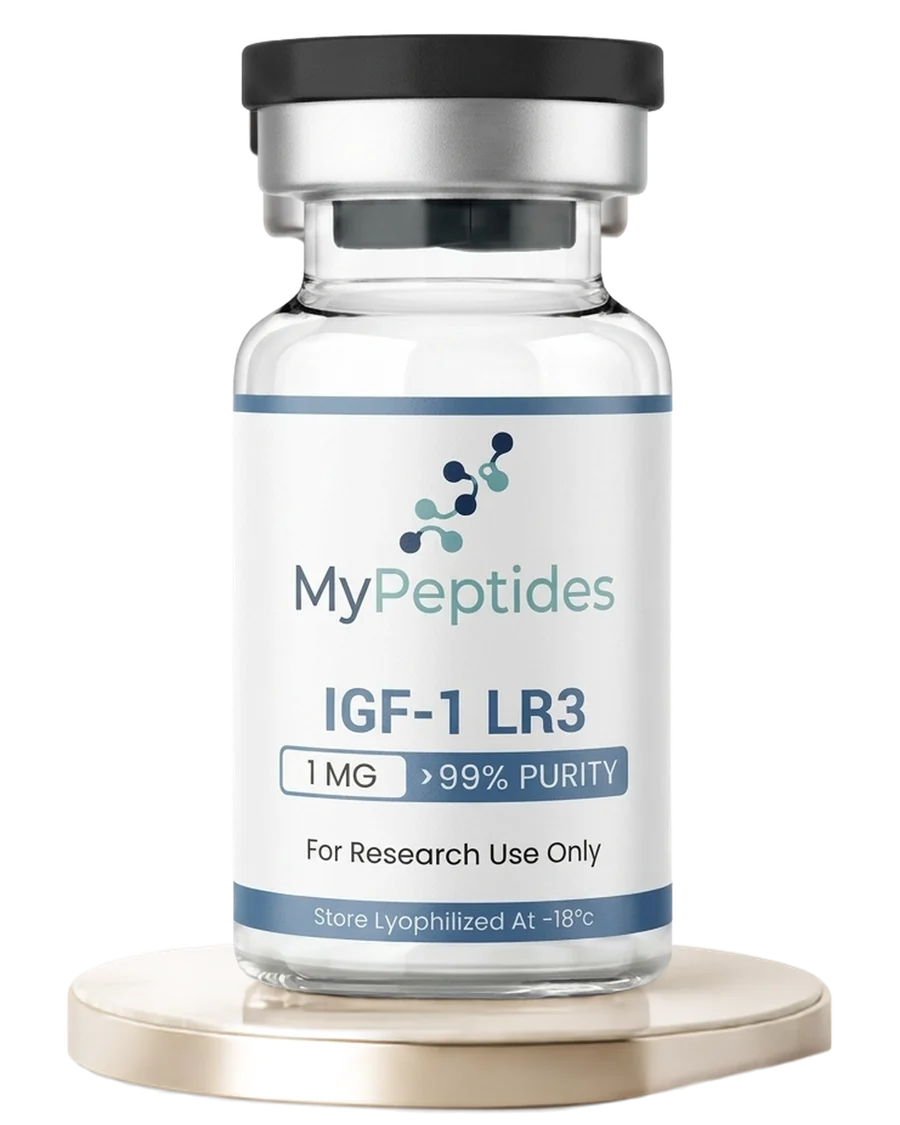
IGF-1 LR3 1 mg research peptide vial, >99% purity

Growth Hormone · Anabolic Potentiator

The Long-Acting Growth Factor

IGF-1 LR3

  • 1 mg
  • >99% purity
  • Lyophilised

RM 790

Awaken profound renewal. IGF-1 LR3 1 mg is a master architect, signaling deep cellular regeneration for a visibly firmer, more youthful foundation.

Key mechanisms & benefits

  • By accelerating cellular turnover, it smooths fatigue and restores supple, vibrant energy from the inside out.
  • It optimizes nutrient delivery to maintain lean, elegant muscle and effortless grace.
  • Reclaim your body’s natural building power and move through every chapter with absolute, radiant confidence.
Certificate of Analysis

All products are independently tested by accredited third-party laboratories. Results confirm identity, purity, and potency.

In stock

1
  • No online payment. We confirm your order on WhatsApp.
  • Store lyophilised at −18 °C.
Ask about this product

For research use only. Not for human or veterinary consumption. This product is not a medicine and is not intended to diagnose, treat, cure or prevent any disease.

Overview

An IGF-1 Analogue That Evades Binding Proteins: Greater Potency in Vivo

IGF-1 LR3 (Long R3 IGF-1) is a modified form of insulin-like growth factor 1 with a 13-amino-acid N-terminal extension and arginine in place of glutamic acid at position 3. These changes greatly reduce its binding to IGF-binding proteins (IGFBPs), which normally hold IGF-1 in the circulation and limit its access to tissues.

In dexamethasone-treated rats, IGF-1 LR3 was about 2.5-fold more potent than native IGF-1 at reversing protein loss, even though it binds the type 1 IGF receptor about 3-fold less well. Its extra potency is attributed to escaping the binding proteins. It is widely used as a research tool, including in cell culture.

Mechanism of action

Reduced IGFBP Binding

Escaping the Binding Proteins

More of the peptide reaches tissues

  • IGFBPs normally bind IGF-1 and restrict its transfer to tissues
  • LR3 modifications greatly reduce IGFBP binding
  • Dexamethasone raised IGFBP-3, limiting native IGF-1 but not LR3
  • Potency in vivo correlated with reduced IGFBP interaction
  • Tomas FM et al., 1992; Read LC et al., 1992
Anabolic Signalling

Protein Synthesis and Breakdown

Coordinated effects on both sides of protein balance

  • Increased muscle protein synthesis
  • Decreased muscle protein breakdown (3-methylhistidine excretion)
  • Improved nitrogen retention
  • Weight gain reflected nitrogen rather than fat
  • Tomas FM et al., Biochem J, 1992
Gut Growth

Among the Most Sensitive Tissues

Marked gut growth in catabolic rats

  • Native IGF-1 increased gut weight by up to 60%
  • LR3 and des(1-3)IGF-1 were severalfold more potent
  • Increased cross-sectional mass, not length
  • Effects in stomach, small intestine and colon
  • Read LC et al., J Endocrinol, 1992

Key finding In dexamethasone-treated rats, IGF-1 LR3 was approximately 2.5-fold more potent than native IGF-1 at reversing catabolism, despite binding the type 1 IGF receptor about 3-fold less well, because it largely escapes the IGF-binding proteins that limit native IGF-1.

Key research findings

≈2.5×

Greater anabolic potency than native IGF-1 in dexamethasone-treated rats

Tomas FM et al. Biochem J, 1992
3× weaker

Binding to the type 1 IGF receptor compared with native IGF-1, offset by reduced IGFBP binding

Tomas FM et al. Biochem J, 1992
Gut

IGF-1 analogues were severalfold more potent than IGF-1 at inducing gut growth in catabolic rats

Read LC et al. J Endocrinol, 1992
Timing

Early LR3 treatment was more effective than delayed treatment at limiting dexamethasone-induced catabolism

Tomas FM et al. J Endocrinol, 1998

Research areas

Catabolism Research

Protein loss in glucocorticoid-treated animals.

  • Dexamethasone models
  • Nitrogen balance
  • Muscle protein turnover
  • Prophylactic vs delayed treatment

Muscle Research

Protein synthesis and breakdown in skeletal muscle.

  • Protein synthesis rates
  • 3-methylhistidine excretion
  • Muscle mass
  • IGF-1 receptor signalling

Gastrointestinal Research

The gut is among the most IGF-1-sensitive tissues.

  • Gut growth models
  • Mucosal mass
  • Intestinal adaptation
  • IGFBP biology in the gut

Cell Culture

Commonly used as a growth supplement in cell and bioprocess culture.

  • Serum-free media
  • Cell proliferation
  • Bioprocess research
  • IGF signalling assays

Safety profile

IGF-1 LR3 is a potent growth factor studied in animals and used widely in cell culture. It has not been studied in human clinical trials. Supplied for laboratory research only.

  • Caution
    Potent growth factor

    Strong anabolic and proliferative activity; account for this in oncology research designs

  • Caution
    Hypoglycaemia

    IGF-1 has insulin-like effects; monitor glucose endpoints

  • Low
    WADA prohibition

    IGF-1 and its analogues are on the World Anti-Doping Agency prohibited list

Animal studies
Potent anabolic effects in rats
Human data
None
Regulatory status
Research use only

Theoretical contraindications in research models

  • Active malignancy: potent growth factor
  • Hypoglycaemia research without glucose monitoring
  • Any human or veterinary use: research compound only

Molecular profile

IGF-1 LR3 Structure

Full name
Long Arg³ insulin-like growth factor 1
CAS number
946870-92-4
Amino acids
83 (13-residue extension + 70)
Molecular weight
≈ 9,100 Da

Modifications

N-terminal extension
13 additional amino acids
Position 3
Glutamic acid → arginine
IGFBP binding
Greatly reduced
Type 1 IGF receptor binding
About 3-fold weaker than native IGF-1
Potency in vivo
About 2.5-fold greater in rats
WADA status
Prohibited

MYpeptides specification

Strength
1 mg
Purity
> 99%
Form
Lyophilised powder
Storage
Store lyophilised at −18 °C
Status
For research use only

Frequently asked questions

What is IGF-1 LR3?

IGF-1 LR3 is a modified insulin-like growth factor 1 with a 13-amino-acid N-terminal extension and arginine at position 3. These changes greatly reduce its binding to IGF-binding proteins.

Why is IGF-1 LR3 more potent than IGF-1 if it binds the receptor less well?

Native IGF-1 is mostly held by IGF-binding proteins, which limit how much reaches tissues. IGF-1 LR3 largely escapes them, so although it binds the type 1 IGF receptor about 3-fold less well, it was about 2.5-fold more potent in rats.

What has IGF-1 LR3 been studied for?

Mainly catabolism in rats given dexamethasone, where it improved nitrogen retention and muscle protein balance and caused marked gut growth. It is also widely used as a supplement in cell culture.

How should IGF-1 LR3 be stored?

Lyophilised vials should be stored frozen at −18 °C or below, away from light. Once reconstituted for laboratory use, keep refrigerated at 2–8 °C.

References

  1. Insulin-like growth factor-I (IGF-I) and especially IGF-I variants are anabolic in dexamethasone-treated ratsTomas FM et al. Biochem J, 1992 · PMID: 1371669
  2. Insulin-like growth factor-I and its N-terminal modified analogues induce marked gut growth in dexamethasone-treated ratsRead LC et al. J Endocrinol, 1992 · PMID: 1613443
  3. The anti-catabolic efficacy of insulin-like growth factor-I is enhanced by its early administration to rats receiving dexamethasoneTomas FM et al. J Endocrinol, 1998 · PMID: 9614362